Shanghai Report: Collaboration Talks with OpenKylin
Back in March at FOSSASIA in Bangkok, I got invited to visit the OpenKylin team in Shanghai. I mentioned it briefly at the end of that report, and here we are — the follow-up post.
The meeting took place at MoMo Cafe, a quiet spot on the outskirts of Shanghai. It was a small gathering, which I appreciated. Large rooms with fifty people tend to produce a lot of talk and very little substance. This was the opposite: a handful of people who actually make decisions, sitting around a table, being direct about what they want to do.
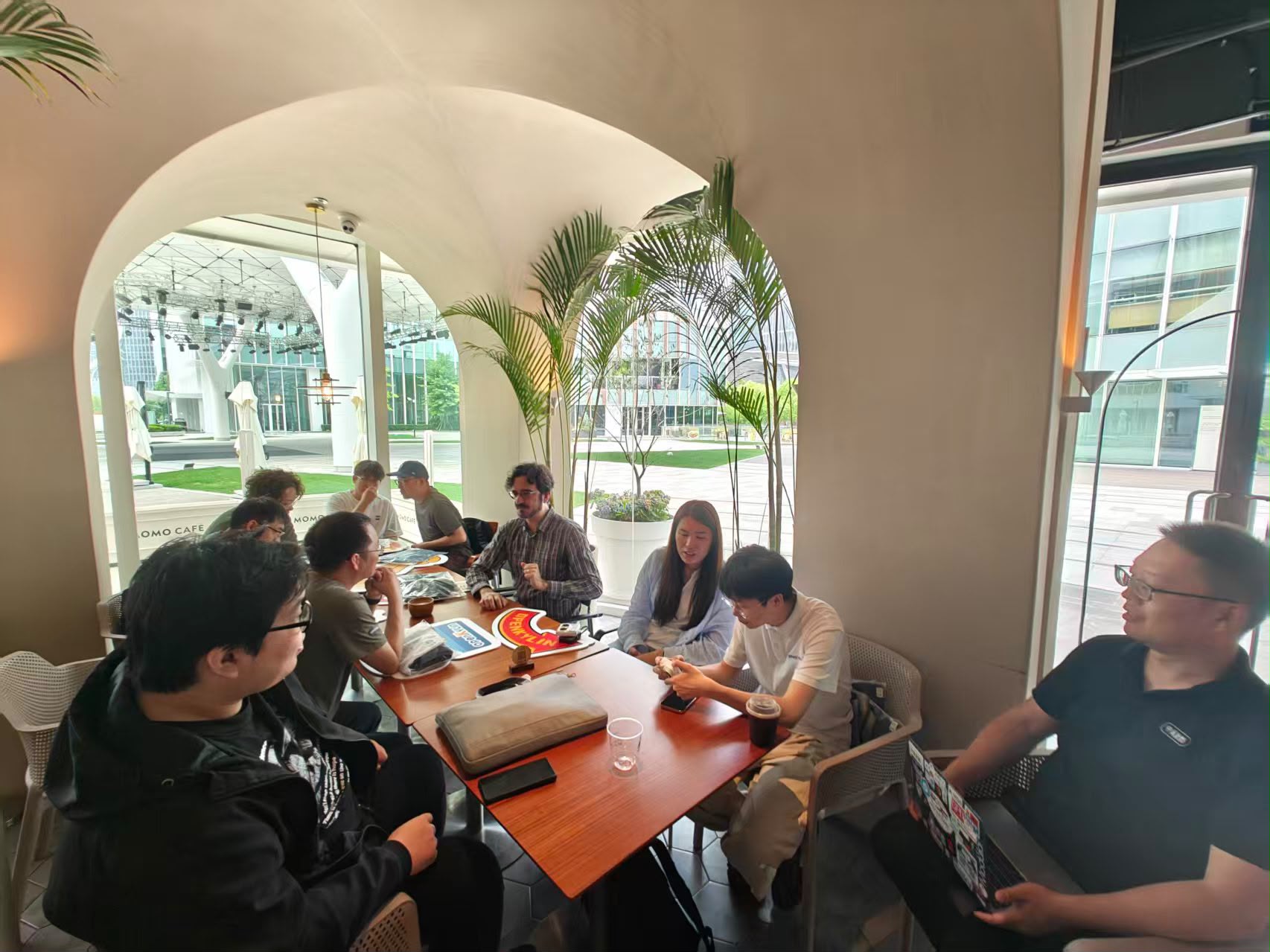
OpenKylin sent Candy, one of their team leaders, who drove most of the conversation on their side. She was clear about where they want to go and honest about the gaps they're trying to close. That kind of directness makes conversations easy.
Two other guests were there that I did not expect: Wang Qing from Intel, and Nick Dong from MuXI Integrated Systems. Having Intel in the room signals something. They are not an organization that shows up to conversations that are going nowhere. Wang Qing was engaged and clearly thinking about this from a platform and ecosystem perspective, not just a product one. Nick Dong, representing MuXI, brought a different angle — a company closer to the hardware integration side, and very interested in what a more open upstream relationship could look like in practice.
The core of what we talked about was upstream collaboration. OpenKylin is building on top of KDE technology, and one of the recurring tensions for any distribution that does that is the question of how much they contribute back versus how much they carry as local patches. This is not a criticism — every distribution goes through this, and the answer is never simple. But the fact that we were having the conversation at all, with the right people in the room, is what matters.
The direction of the talks was good. There was genuine interest in moving toward a model where changes developed for OpenKylin find their way upstream, and where the OpenKylin team has a more active presence in the KDE community. Getting there takes time and process, not just intention, but the intention has to come first.
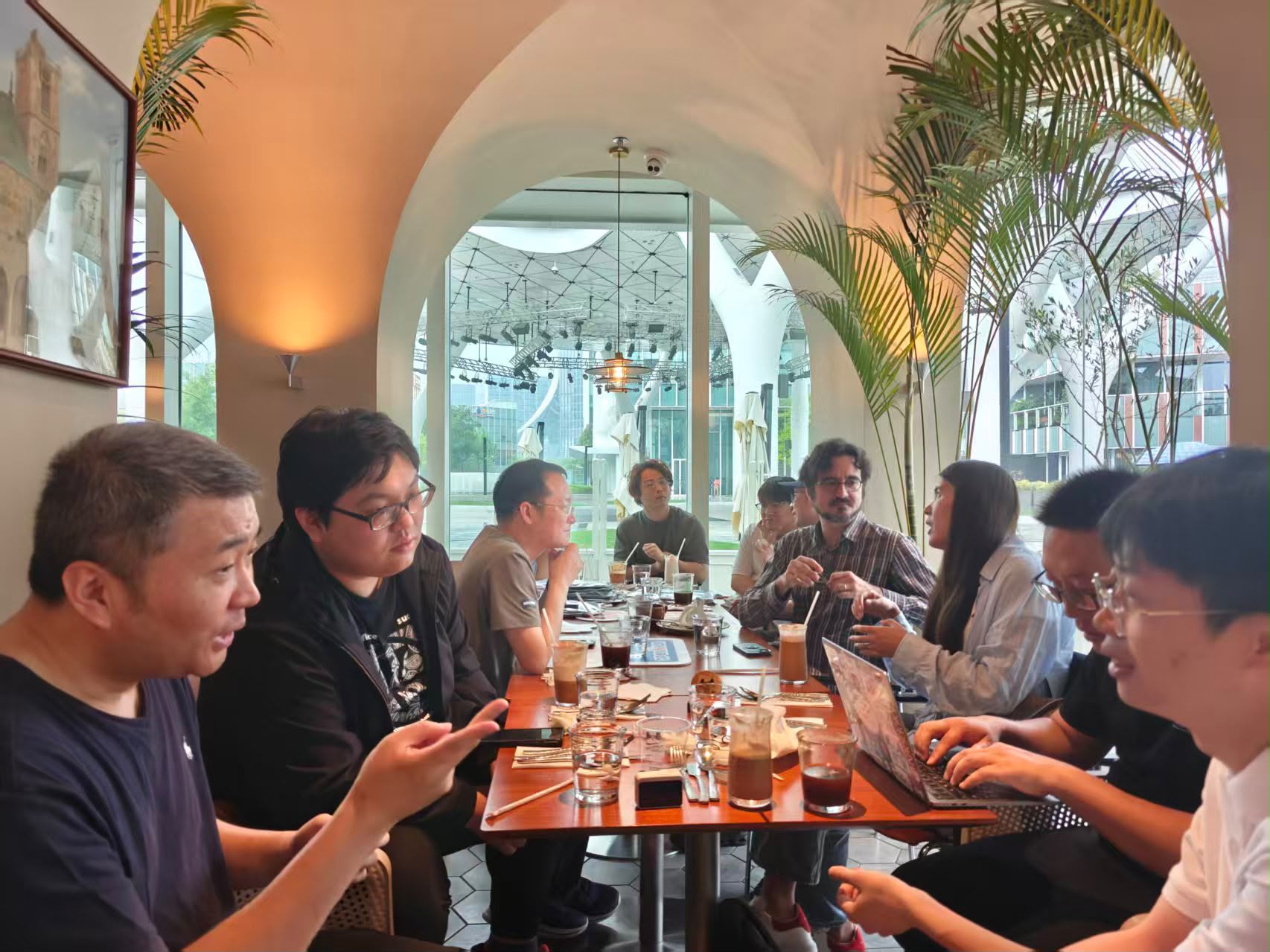
I came away from the afternoon optimistic. Not in a vague conference-high kind of way, but in the specific sense that the people I spoke with understand what upstream collaboration actually means and why it matters. That understanding is rarer than it should be, and when you find it, you try to make the most of it.
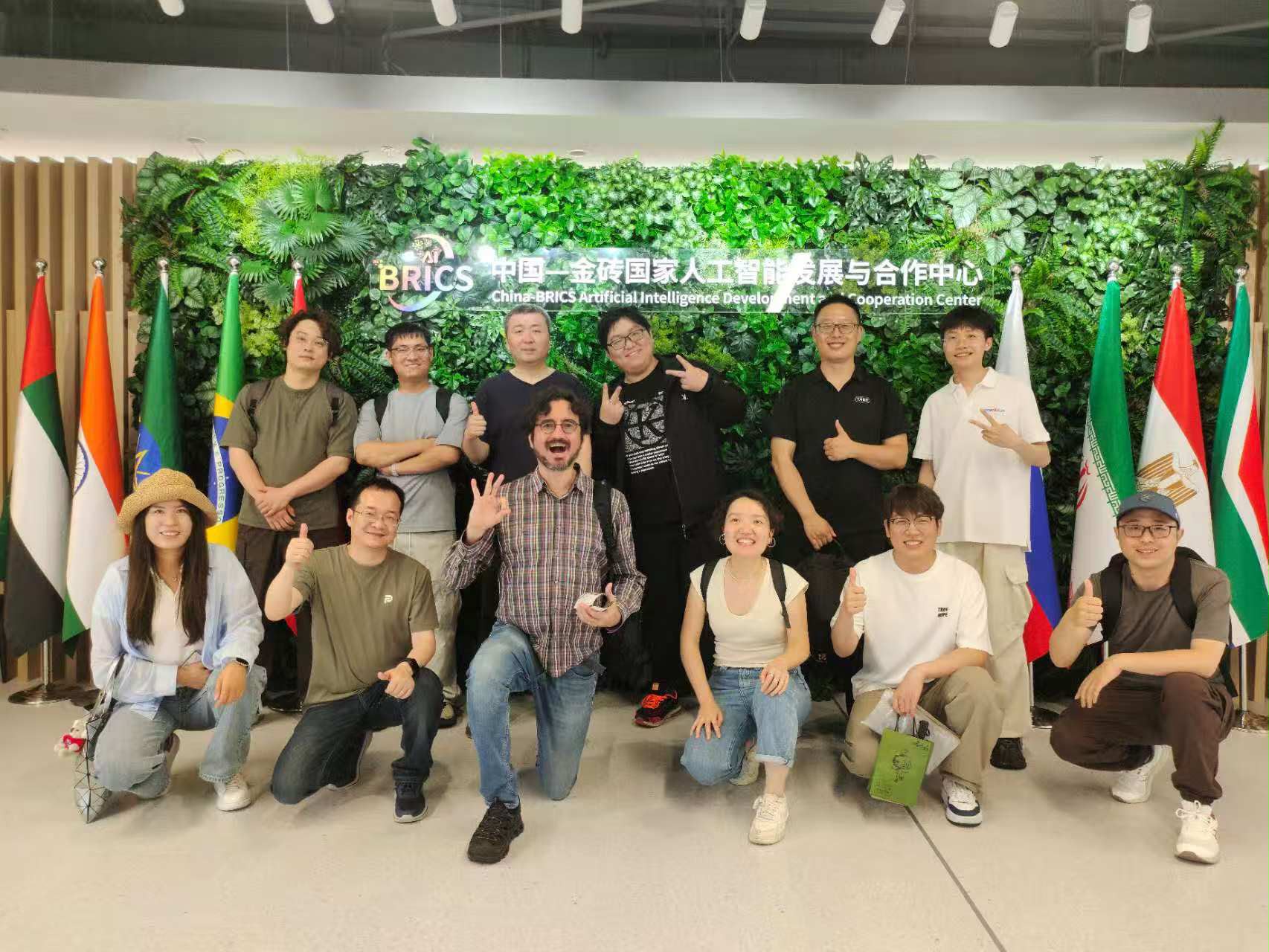
After the cafe, the group took me to visit the China-BRICS AI Development and Cooperation Centre, located in Shanghai's Xuhui district. The centre was established in January 2025 and holds UNESCO Category 1 status — the same level as centres that fall directly under UNESCO's auspices rather than simply being affiliated. That is not a small distinction. It signals that what happens there is meant to carry institutional weight internationally, not just domestically.
The stated mission of the centre is to provide a shared platform for AI research, training, and knowledge exchange across BRICS nations — Brazil, Russia, India, China, South Africa, and the newer members. The explicit strategic framing is South–South cooperation: building AI capacity and infrastructure outside the ecosystems dominated by a handful of Western corporations. The centre runs joint projects in areas like multilingual natural language processing and climate forecasting, which are problems where the BRICS countries have both strong shared interest and datasets that Western research labs tend to underrepresent.
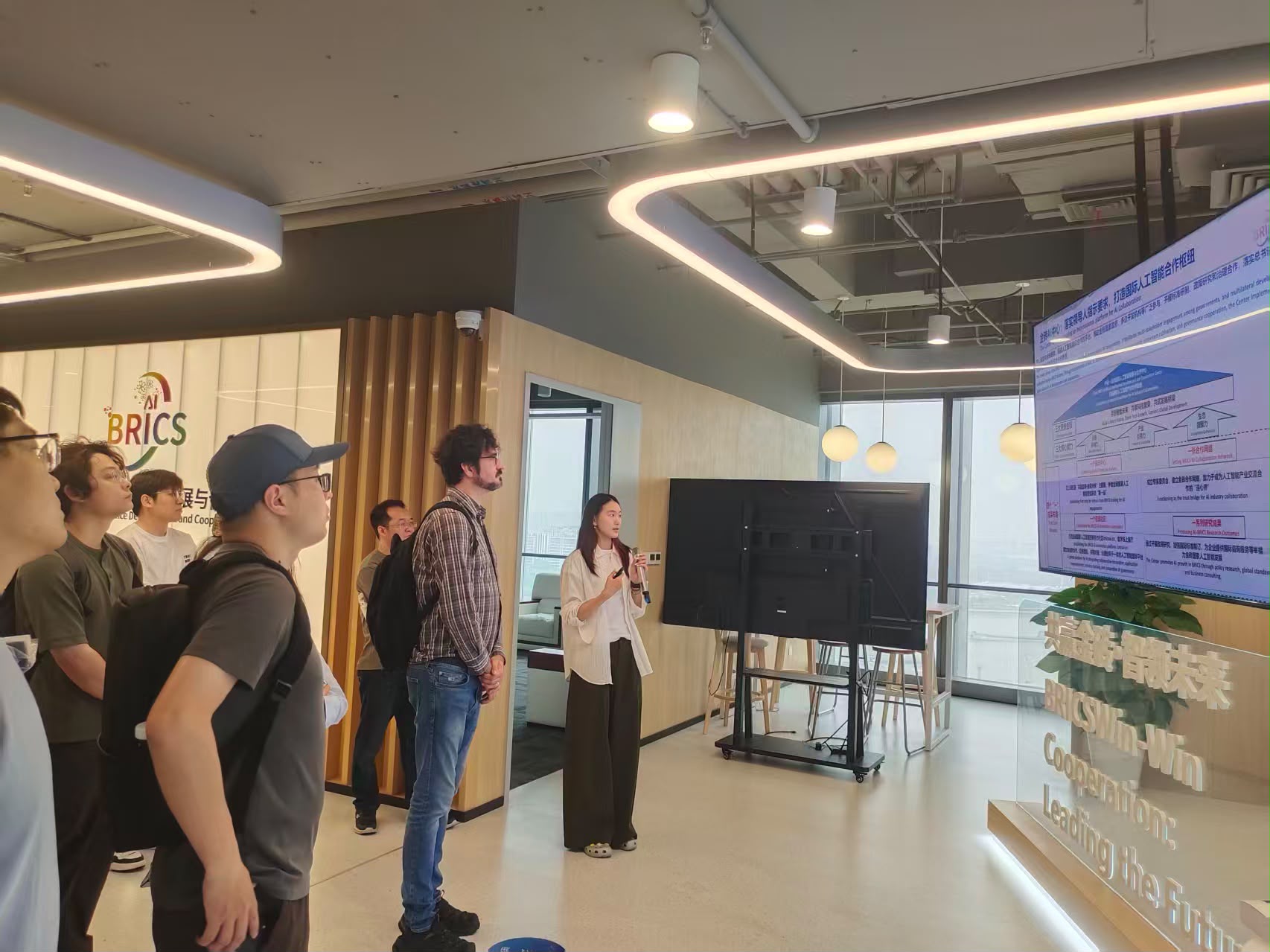
Walking through it, the connection to our earlier conversation at MoMo Cafe was hard to miss. The same tension exists at both scales: whether you are a Linux distribution deciding how much to contribute upstream, or a bloc of countries deciding how to develop AI without depending entirely on infrastructure you do not control, the underlying question is the same — how do you build genuine capacity rather than just consuming what someone else built? The answers differ, but the framing is identical.
I do not think the visit was accidental. Candy, Nick, and Wang Qing are all operating at an intersection where open-source software, hardware ecosystems, and geopolitical priorities overlap more than people in the KDE community usually have to think about. Seeing the centre made that intersection concrete in a way that a conversation over coffee could not.
Shanghai itself I barely saw — a city that size deserves more than one afternoon of jet-lagged wandering. I will have to come back under better circumstances. The coffee at MoMo was excellent, at least.